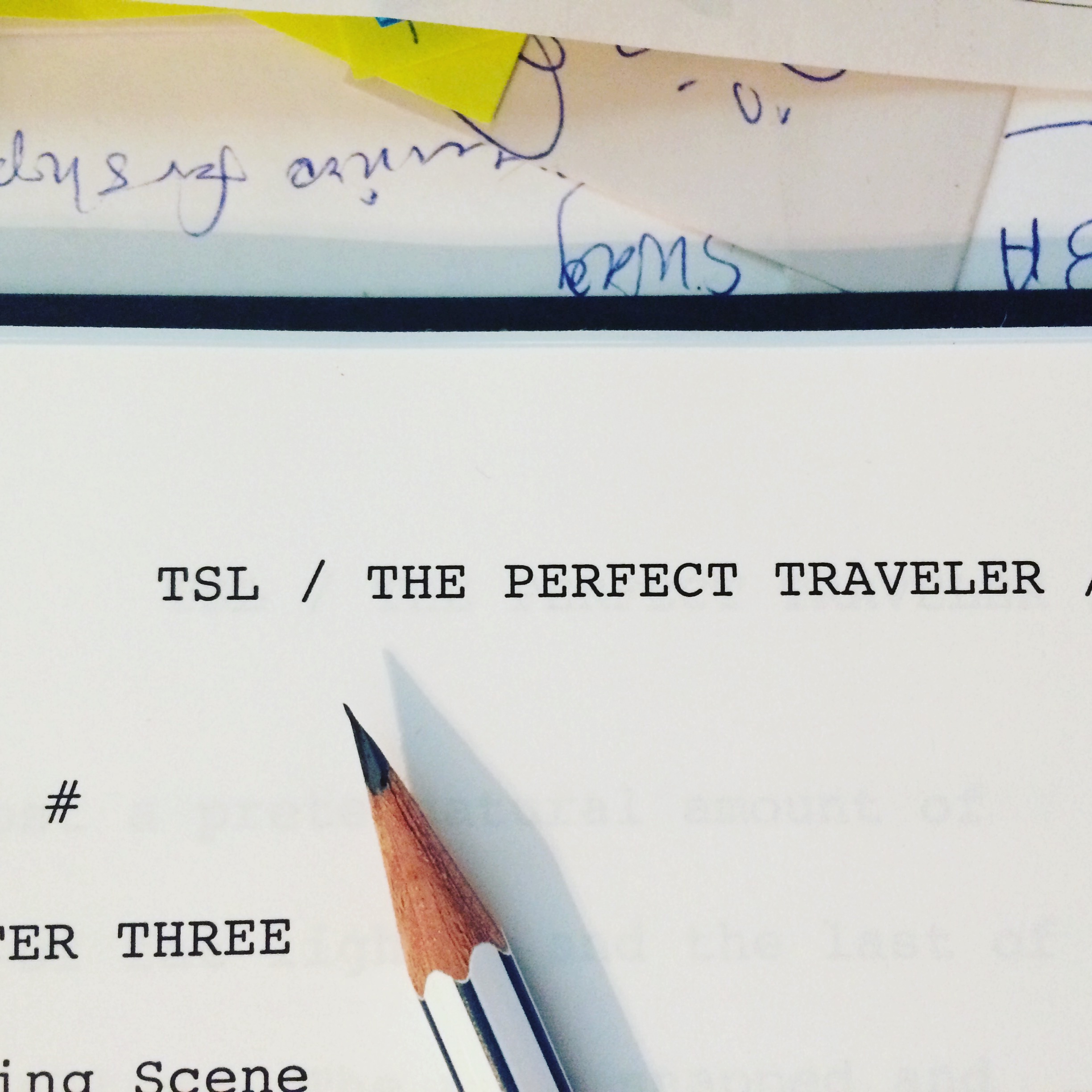
Editing My Novel: The Value of Taking a Break
When finished the second draft of my novel, The Perfect Traveler, I had a sludge of slow cooked emotions in my pot. Relief, pride, discouragement, frustration, embarrassment, achievement….never has the classic writing advice to, “put it away in a drawer for awhile and forget about it” felt like such a pressure value to me. I took it to heart. The print out was bound, set aside, and forgotten. The intention was 2 months.
I read other fiction, focused more intently on work and family, and when my novel occurred to me I’d jot down a note on a sticky pad, slap it to the manuscript, and close the drawer again.
Shirley Jackson has nearly become a patron saint. I discovered her writing during this season (how did I ever get this far in life without knowing her?) and am still devouring her canon. I wrote a short story to give away to friends, now an annual tradition of mine. I debated never writing again. For three of those weeks, I didn’t.
I didn’t wonder when to pick it up again. Whenever too much time passes without writing, a panicky anxiety presses on my chest. That rose in my throat the week between Christmas and New Year’s. I’ve read somewhere that anxiety is to writers what the wind is to a storm: all that churning spurs the action. It seems essential. I saw a phrase that goes, “write like you’re running out of time” and thought yes, that’s it exactly.
Stepping away from a manuscript can create a strange kind of distance, but that distance can also change the way a writer understands the story when they finally return to it. Fiction gives us room to invent people and circumstances, while memoir asks us to look back at experiences that actually happened and decide what deserves a place on the page. That can be surprisingly difficult because real life rarely arrives with a neat beginning, middle, and ending, and the memories that matter most may not fit together in the order they happened.
Writers working on personal stories can use a memoir outline template to give those experiences some shape before turning them into chapters, particularly when several periods of life connect through a shared idea or emotional thread. The outline can provide direction without forcing every memory into a rigid sequence, leaving room for discoveries that often emerge during revision.
Sometimes the time spent away from a manuscript is what allows those connections to become visible, making it easier to return to the work with a clearer sense of what the story is really trying to say.
Blackwing Palomino sharpened and ready for the editing ahead.
I have a new Blackwing Palomino sharpened and ready to go and clarity on the next few steps. Most importantly, the thing I was worried the most about– length and simplicity of plot– has been answered. Those aren’t necessarily hinderances, let alone the hallmarks of failure I feared they were.
It’s as if someone came and shoveled away all the snow that covered my path.





Leave a Reply
You must be logged in to post a comment.